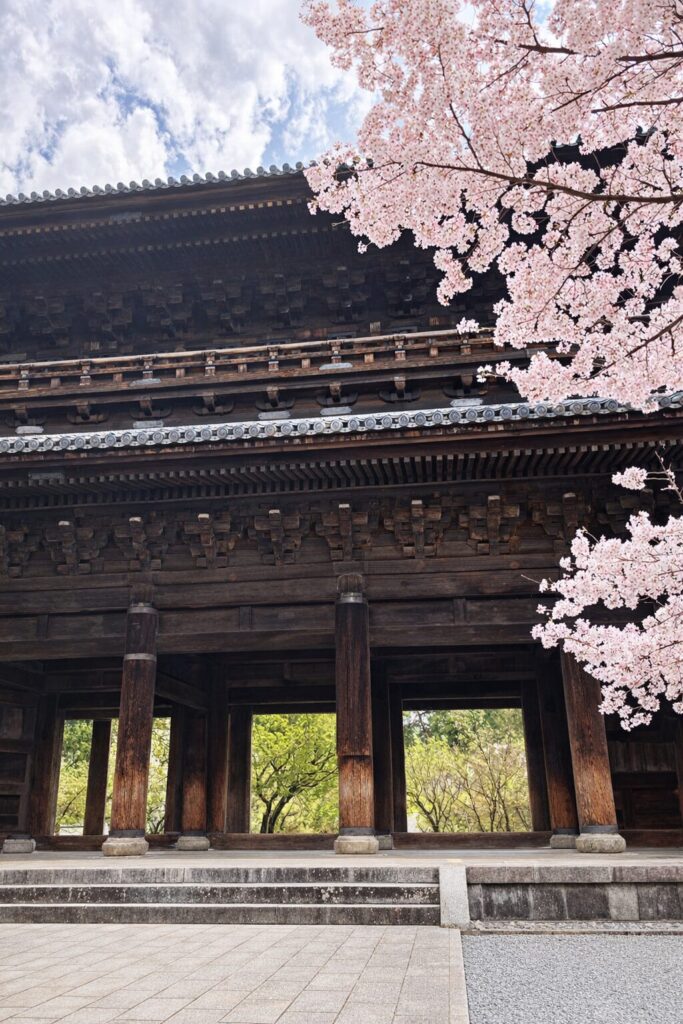
Nanzen-ji Temple, located in Sakyo-ku, Kyoto City, is a representative Zen temple in Japan, known as the head temple of the Nanzen-ji branch of the Rinzai school of Zen Buddhism. Its origins trace back to 1291 when Emperor Kameyama’s detached palace was converted into a Zen temple, giving it a special status, even higher than the Kyoto Five Mountains.
The vast grounds are dotted with historical buildings and gardens, creating a beautiful landscape harmoniously integrated with the changing seasons. In particular, the brick arch bridge “Suirokaku,” built during the Meiji era, boasts a unique atmosphere blending Japanese and Western styles, and has recently become a popular spot on social media.
It is highly regarded not only as a tourist destination but also as a place for spiritual solace, attracting many visitors from both Japan and abroad.
1-1 History and Characteristics of Nanzen-ji Temple (Head Temple of the Rinzai School)
Nanzen-ji Temple, with its history of being a converted imperial detached palace, boasts a special status unlike other Zen temples. As the head temple of the Nanzenji branch of the Rinzai school of Zen Buddhism, it has numerous branch temples throughout Japan and has played a central role in spreading the teachings of Zen.
The temple grounds contain many buildings designated as National Treasures and Important Cultural Properties, and its high historical value is a major attraction. The space offers a chance to experience the Zen spirit of “stillness” and “nothingness,” and it continues to attract attention as a place for spiritual cultivation.
1-2 Reasons for Nanzenji’s Popularity (The Aqueduct and Scenic Views)
One reason for Nanzenji’s popularity is the abundance of sights to see.
Among them, the most iconic is the “Aqueduct.” Built in 1888 as part of the Lake Biwa Canal, this brick arch bridge offers a rare sight among Japanese temples.
In addition, there are many other famous spots where history and beauty blend, such as the impressive Sanmon gate and the beautiful dry landscape garden of the Hojo. The temple’s charm also lies in its different expressions in each season, such as the cherry blossoms in spring and the autumn leaves.
The surrounding area also boasts numerous tourist attractions such as the Philosopher’s Path and the Keage Incline, making it an excellent place for a leisurely stroll.
1-3 Who is Nanzenji Temple recommended for? (Sightseeing & Relaxation)
Nanzenji Temple is especially recommended for the following people:
- Those who want to experience Kyoto’s unique history and culture
- Those who enjoy taking photos and posting on social media
- Those who want to calm their minds in a peaceful environment
The tranquil atmosphere unique to Zen temples permeates the area, giving you a feeling of mental reset just by visiting. It is a representative Kyoto landmark that combines sightseeing, relaxation, and learning.